About
The resource I couldn't find
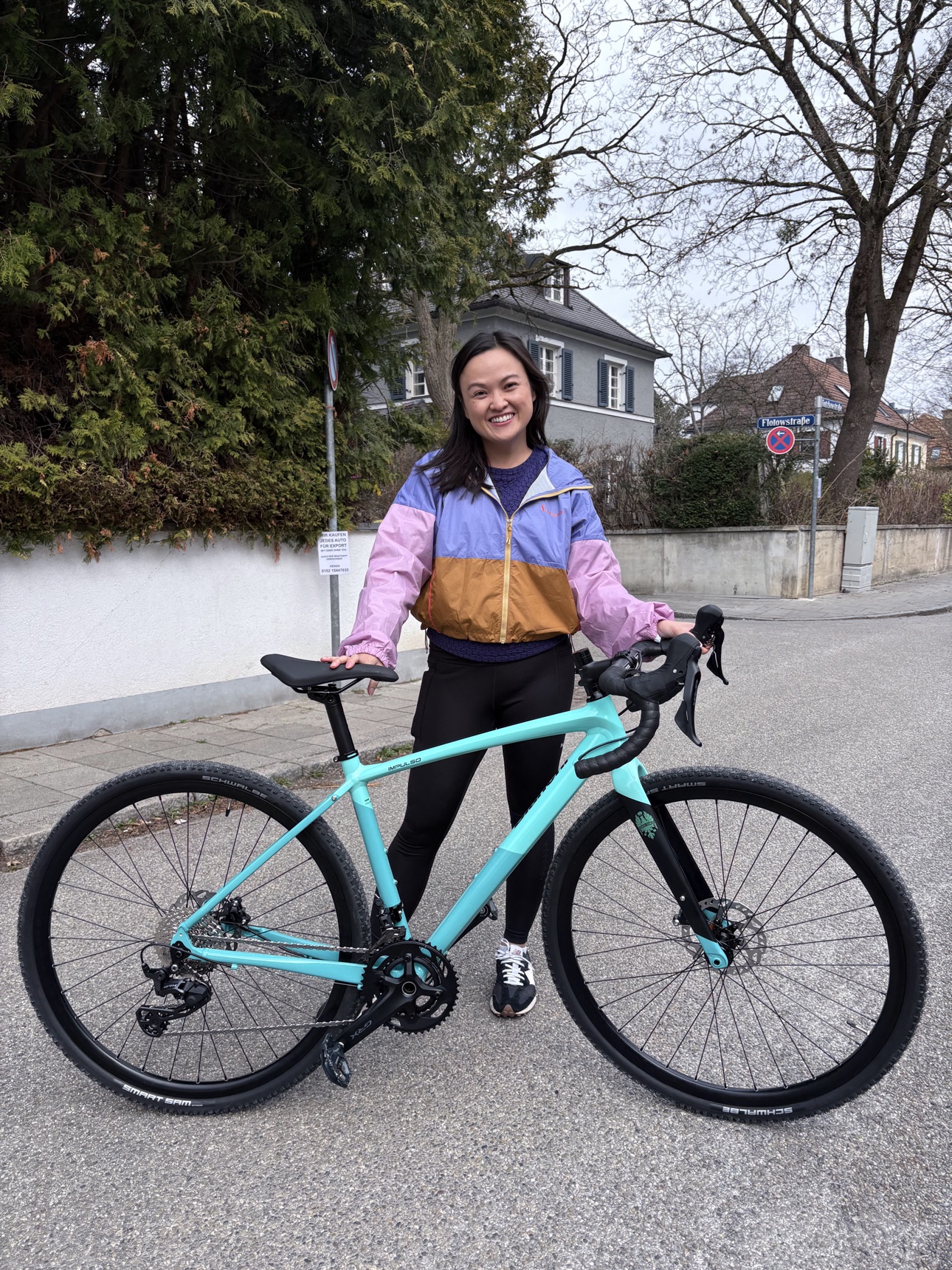
The first time I rode my new bike, I didn't know how to stop it.
Not the brakes — those I figured out. I mean the part nobody warns you about: I'm 160cm, about 5'3", and when I sat on my first drop-bar bike, my toes didn't reach the ground. So there I was, perfectly able to pedal away, with no idea how to get off without tipping over into a hedge. It sounds so small. But I remember sitting there thinking: surely there's a guide for this. Surely someone has written down the actual, physical, beginner basics.
There wasn't. Not really. Not for me.
What I found instead
What I found, when I went looking, was a wall of advice that mostly wasn't built for me.
Some of it came from riding partners — well-meaning, generous, and a foot taller than me. Their saddle height, their reach, their "just do what I do" — none of it translated to my body. Some of it came from the wider cycling world, which has spent decades writing for men, by men, and quietly assuming that was everyone.
And then the knee pain started. Then my shoulders. I began the slow education every woman on a stock bike eventually gets: that maybe my cranks were too long, my handlebars too wide — parts specced for an average that wasn't me. But figuring that out meant descending into Reddit threads and YouTube rabbit holes at midnight, cross-referencing strangers, trying to assemble one coherent answer out of twenty scattered ones.
What Frame of Mind is
Frame of Mind is the resource I wish I'd had that first day — plain-language, no gatekeeping, and built around the fact that women's proportions aren't just a smaller version of men's. It starts from your body, and it's all in one place: quick tools to point you at an answer, deeper guides for when you want the full picture. Everything here is one approach, never a rule — because bodies and bikes vary, and the call is always yours.
So if you've ever felt like you were doing it wrong, like everyone else got a manual you missed — you didn't, and you're not alone. Come take up space on the road, on your own terms.
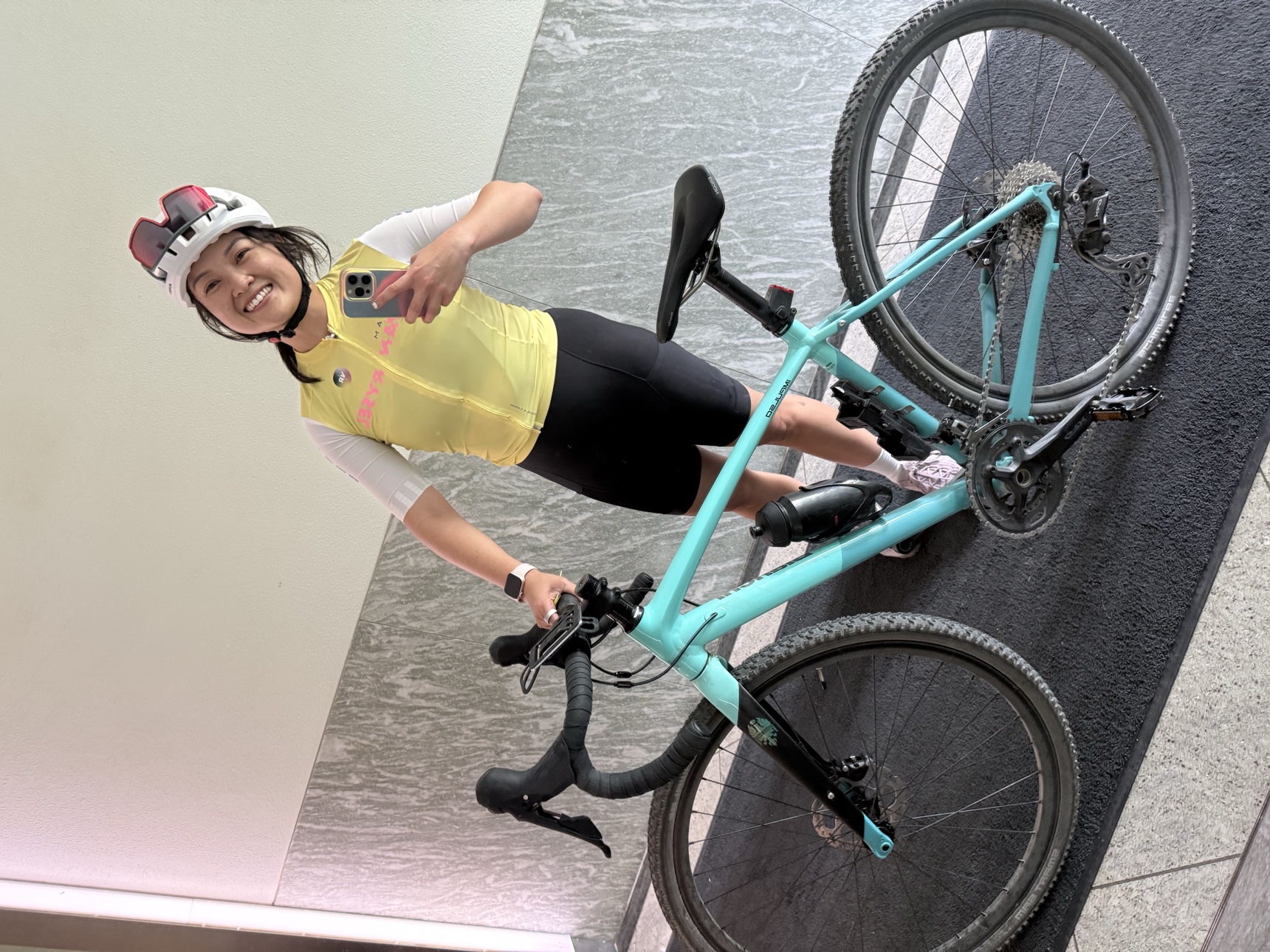
Own the gear. Own the road. Own your Frame of Mind.
— Linh
Not sure where to start? → Where does it hurt?